
AI-assisted creation triggers disputes
An art student discovered that a design work she had created with the assistance of artificial intelligence (AI) was being sold online at a high price, leading to a complex legal battle over her rights to the work. The unexpected outcome of this case highlights the intricacies of copyright protection for AI-generated work.
Wang Yanjie, deputy chief judge of the Case-filing Division of the Beijing Internet Court (BIC), attended Legal Report, a program on China Central Television, to discuss this case involving infringement of AI-generated design copyright.
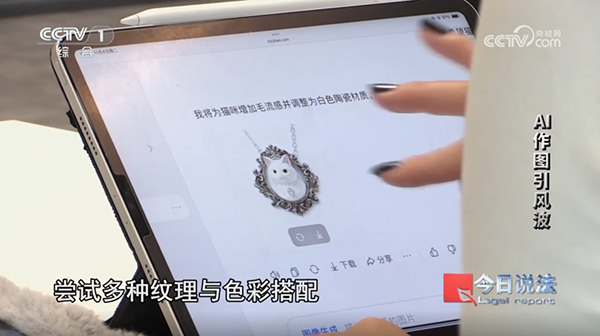
The plaintiff, majoring in ceramic design at an art college in Beijing, found that her original design work, a white cat peeping out of a silvery framework decorated with a diamond, was used on an e-commerce platform to draw customers to buy products tailored to this image. She contacted the seller, seeking either payment or the removal of the picture from the store.
The initial negotiation resulted in the picture being removed but the seller refused to compensate the plaintiff. However, months later, the plaintiff found the seller had published this design on several other platforms and subsequently entered into negotiation again. Without getting satisfying results this time, the plaintiff sued the seller at the BIC, requesting 7,000 yuan ($1,003) in compensation.
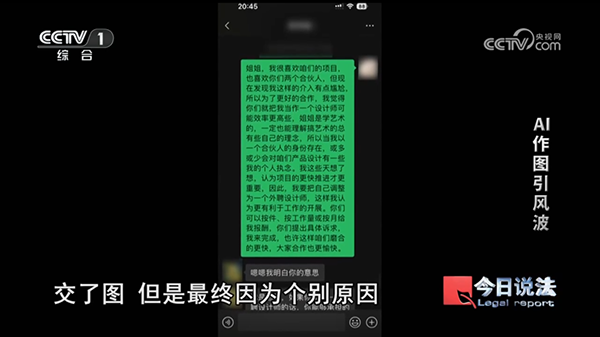
The defendant (seller) is a graduate of the plaintiff's college. As legal person of a technology company, she once posted recruitment advertisements in the college's WeChat group, enticing the plaintiff's application. Fully satisfied with the plaintiff's work, she expressed cooperation intentions and gave an overview of her products. She also encouraged the plaintiff to use AI in the creation process, which led to a variety of necklace design drafts. Among them, the defendant chose the one involved in the case for their debut product.
The cooperation was nonetheless halted without any payment made to the plaintiff. Several months later, the defendant put the design on various online platforms for sale. The plaintiff chose to defend her rights through legal means and applied for copyright registration for the design.
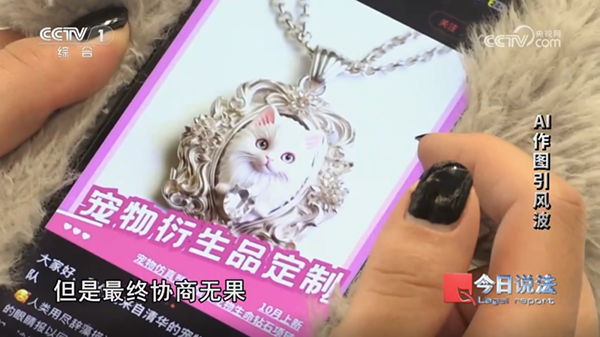
During the court hearing, the defendant admitted the plaintiff's authorship but denied right infringement. She argued that the work does not qualify as a protected work because it does not meet the standard of originality or creative expression.
Article 3 of the Copyright Law stipulates that the term "works" refers to intellectual achievements in the fields of literature, art and science, which are original and can be expressed in a certain form. As the design is indeed an artistic picture, the dispute in this case centered on whether the design is original and contains intellectual contributions.
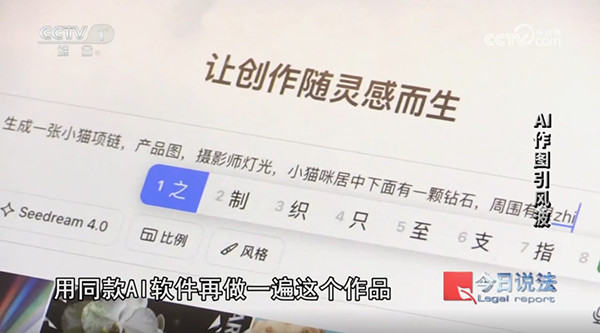
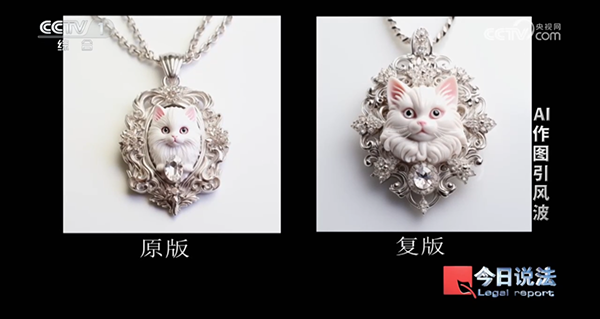
However, the plaintiff failed to submit any evidence of her creation process, as her AI software account was banned for misuse. Under the suggestion of her lawyer, the plaintiff recreated the design on the same software by designating more than 20 precise prompts. She argued that the recreation process can be deemed as complementary proof to show her unique intellectual endeavors contained in the design.
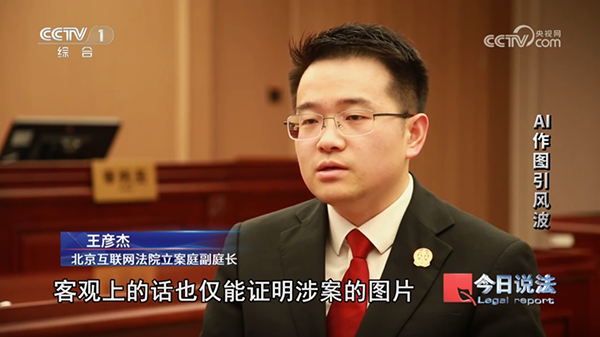
The BIC dismissed her argument as the recreation isn't the true creation process itself. The simulation can only prove AI assistance, not the plaintiff's original input. Finally, insufficient evidence of originality spurred the court to reject all of the plaintiff's claims.
This case reminds the plaintiff of the importance of evidence in the protection of rights. Now she insists upon signing a written contract when collaborating with others, and always documents the entire AI creation process. In this way, she can defend her rights by legal means.
Tips from this case:
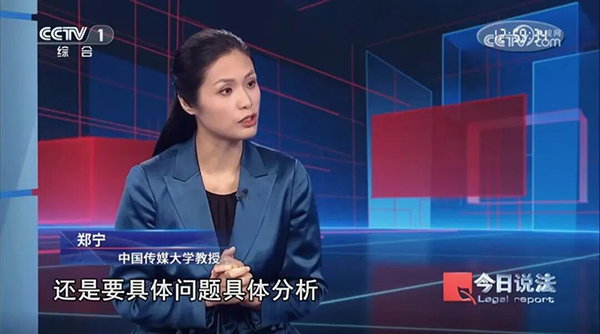
Copyright of AI-generated work should be evaluated on a case-by-case basis. Legally defined and protected "work" necessitates originality. Creators who guide an AI model through detailed prompts, repeatedly adjust parameters, and make multiple refinements during the creation process may be entitled to copyright protection; however, this entitlement may be undermined if the image is generated solely on the basis of a simple prompt. In this case, if the plaintiff can prove her consistent modification and refinement in the creation process, she might enjoy a copyright for her work.
Creators should keep a record of the creation process for rights protection. The plaintiff failed to fulfill the burden of proof and to offer the original creation records, thereby losing recognition as the copyright holder.
 Beijing Internet Court Lawsuit Service WeChat Account
  Beijing Internet Court WeChat Account


