
Individual penalized for making false claims about an AI-generated picture to influence trial proceedings
In the era of artificial intelligence (AI), copyright cases require claimants to honestly state whether the work in question was generated by AI. In a recent case concerning a dispute over the right to network dissemination of information of a work, the Beijing Internet Court (BIC) took measures against a party who made false statements and engaged in bad-faith litigation intended to evade the court's review of the work's creative process and originality.
Case summary
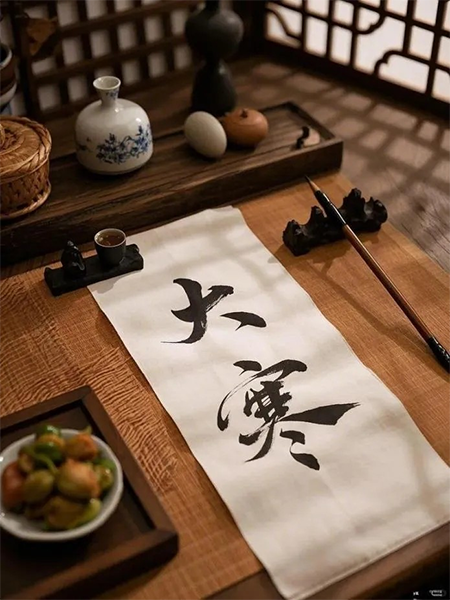
The image in question.
The plaintiff, surnamed Wei, claimed that the defendant, a company, used a photo without authorization upon which he held the copyright. The plaintiff filed a lawsuit on the grounds that his right to network dissemination of information had been infringed upon, and requested that the court order the defendant to make compensation.
The judge found that the photo in question showed clear signs of being AI-generated. But the plaintiff said that he didn't know the creative process of this photo and that the relevant materials were provided by his authorizer, surnamed Zhou. He also argued that the original photo he submitted to the court had metadata such as shooting time and location. As a result, the judge instructed the plaintiff to verify the photo´s nature and creation process with Zhou.
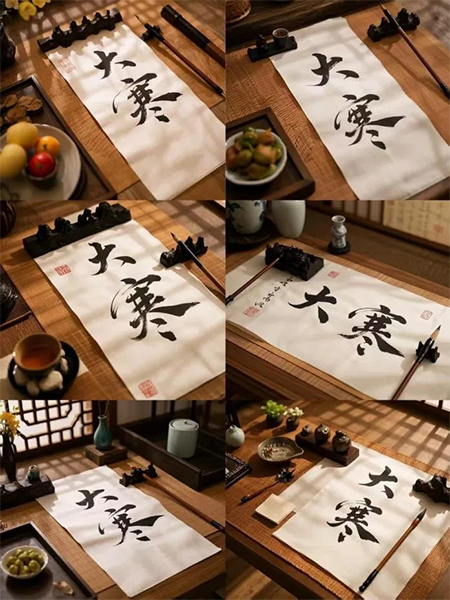
These might be a series of AI-generated photos.
At the second hearing, the plaintiff changed his statement, saying the photo was jointly taken by Zhou and him, and described in detail the specific shooting time, location and equipment used as well as matters including signing a transfer agreement and making copyright registration.
The judge made it clear that providing fabricated evidence or making false statements could obstruct the litigation and would subject him to legal consequences. But the plaintiff held to his statement that he participated in the shooting process and confirmed that the photo involved was not AI-generated.
To ascertain the facts, the BIC added Zhou as the third party into the litigation. In court hearing, he denied all of the plaintiff's statements, including those regarding the process of creation, the authorization and the copyright registration, and submitted counter-evidence.
In light of the statements and evidence provided by the third party, the plaintiff chose to withdraw the lawsuit while admitting that he made false statements during the hearing. He explained that the image in question and authorization documents were purchased from a person not involved in the case, and that he was not aware of its process of creation and unable to contact the seller.
The BIC dismissed all of the plaintiff's claims and decided to impose a fine of 10,000 yuan on him for making false statements. The judgment has taken effect and the plaintiff has paid the fine and expressed remorse.
The BIC judge explained that:
There are flaws in the copyright chain of title, so the BIC didn't support the plaintiff's claims.
Article 12 of the Copyright Law of China stipulates that "the natural person, legal entity or unincorporated organization whose name is affixed to a work shall be the author of the work and enjoy corresponding rights in the work, unless there is proof to the contrary."
The photo involved had been published on the internet without attribution. To prove his ownership of the copyright, the plaintiff submitted the commission agreement, the photo's metadata, registration certificate, the first-publication webpage, and real-name verification information of the Rednote account that first published the photo.
Although the commission agreement and registration certificate showed that Zhou is the creator, Zhou stated and provided evidence that he had never taken the photo in question and had neither signed nor affixed his seal to the commission agreement.
The plaintiff admitted that his earlier statements about taking the photo with Zhou were not true, and related materials were bought from someone not involved in the case.
Therefore, the original creator of the picture was not the third party, and there was a situation where someone impersonated Zhou to make the copyright registration. The evidence chain of authorization provided by the plaintiff had obvious flaws, so it couldn't prove that the plaintiff lawfully acquired the copyright. The claim that the defendant had infringed on the plaintiff's right was not valid, and the plaintiff's claims lacked factual and legal foundations, so the BIC did not support them.
The plaintiff made up the creation process to mislead adjudication, and thus should take legal responsibility.
According to Article 13 of the Civil Procedure Law of China, in civil procedures, the principle of good faith shall be adhered to.
Under Article 114 of Civil Procedure Law, where a litigation participant or any other person commits any of the following conduct, the people's court may impose a fine or detention on the litigation participant or person according to the severity of the circumstances; and if suspected of any crime, the litigation participant or person shall be subject to criminal liability in accordance with law.
Under Article 63 of Provisions by the Supreme People's Court on Evidence in Civil Proceedings (revised in 2019), the parties concerned should make factual and complete statements on the case facts.
The plaintiff, as the purported transferee of the photo's copyright, was aware that the court's primary focus was to examine whether the photo was AI-generated, yet he himself was unable to confirm its originality. Nevertheless, he made up the statements and intended to evade judicial review of the photo's authorship, classification, and originality. This has disrupted the adjudication and increased the court's costs in verifying, tracing and assessing the photo's nature and originality, and could ultimately allow non-original content to obtain judicial protection and improper benefits through fabricated claims regarding the work's type and creation process.
The plaintiff sought to misguide the trial, gravely violating the principle of good faith, seriously impairing the judge's ability to determine the facts, and obstructing the normal litigation process. It amounted to making false statements, for which the court imposed judicial sanctions.
Tips from the judge
Under the Measures for Labeling of AI-Generated Synthetic Content, which came into effect on Sept 1, 2025, AI-generated content should have explicit and implicit identifications. This means that every AI-generated text, image, audio and video shall carry a mandatory "digital identity" label.
In judicial practice, the creator and the transferee of copyright should fulfill their duties in describing the nature of the work truthfully and clarifying whether the work in question is generated by AI.
First, the originality review of AI-generated content requires particular attention to the creator's input of original intellectual effort. It is fundamental for the judicial authorities to determine the trial´s direction, and to reach a factual and legal judgment that the claimant truthfully states the means of creation.
Second, with the volume of AI-generated content rocketing, the mass production of template-based images and videos is supplying the online content industry with abundant resources and commercial opportunities. Strengthening the obligation for parties to make truthful statements helps curb bad-faith litigation practices, such as fabricating creation processes and falsifying ownership documentation.
 Beijing Internet Court Lawsuit Service WeChat Account
  Beijing Internet Court WeChat Account


